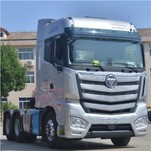
More than four years later, the first foreign-made vehicles are expected to be imported into Iran within a few months, according to Middle East media reports. Iran hopes the move will help a chaotic market plagued by monopolies and unaffordable problems.
In August, President Ibrahim Rahi's cabinet approved an agenda to allow the import of foreign-made cars. At this point, more than four months have passed since the date when the government initially approved the import.
Import duties on electric and hybrid vehicles will be 10% and other vehicles will be 45%.

In July 2018, Lehi's predecessor, President Hassan Rouhani, officially issued a ban on the importation of vehicles in the form of complete manufacturing units (CBUs). According to this regulation, only fully disassembled (CKD) forms are allowed to be imported, and complete assembled units cannot be imported.
The ban at the time was in response to the U.S. unilateral withdrawal from the 2015 nuclear deal between Iran and world powers a few months ago. Subsequently, Iran suffered from waves of all-round economic sanctions. In addition, it triggered a currency crisis in Iran.
The move also opens up the opportunity to import fully disassembled (CKD) components for various Chinese vehicles as those key Western partners withdraw from the Iranian market. Since then, these Chinese cars have spread across the Iranian market.

However, most of the market share is still controlled by a few local automakers. Chief among them is the Iranian state-owned Khodro Automobile Group. Previously, the company had been solely responsible for making those low-quality cars. And in the context of the currency crisis and the subsequent rising inflation, the quality of these cars has also deteriorated.
Police authorities and experts have also accused Iran of having a high probability of fatal traffic accidents in some local vehicles, especially older models that are still in vogue, such as automaker Saipa, which has now withdrawn from the market. The Pride model, which is notorious for being the "chariot of death" due to its high accident rate.
For ordinary Iranians, many Chinese cars imported in fully dismantled (CKD) form are also unaffordable. Because these cars are usually sold to consumers at exorbitant prices (often more than 2 times the actual price). The reason for this is that Iran has imposed high tariffs on imported products. It is said that this seems to be to protect and stimulate local production activities.

In this environment, some hope that the new car import agenda will be a signal of a policy shift that will signal Iran's opening up of its market to a larger number of higher-quality cars.
But U.S. sanctions are still squeezing Iran's source of foreign exchange earnings. At the same time, affordability remains a serious issue. In this context, the government has enacted regulations purportedly aimed at banning the import of "luxury goods".
On the one hand, in the agenda approved by the cabinet, the quota for imports through the Central Bank of Iran is only 1 billion euros ($1 billion). All imported cars should be capped at 20,000 euros each. In addition, each car worth less than 10,000 euros is a priority. The move is to benefit ordinary consumers.
The above rules automatically exclude many popular models from the world's top brands. This also means that up to 100,000 vehicles will be able to be imported into the Iranian market.
According to the government, importers are tasked with investing in and building charging stations. Because only hybrid or fully electric vehicles can be imported into special trade or industrial zones.
The government's agenda also stipulates that Iran will introduce incentives for local manufacturers, including technology imports and component imports, to improve the companies' own production skills.

The first vehicles are expected to arrive in Iran within a few months, before the end of the current Iranian calendar year in March 2023.
In addition to Chinese and Indian companies, Iran has also negotiated with Western companies, government officials said. But it did not elaborate on the specific situation.
The government agenda also provides opportunities for foreign investment. The agenda stipulates that cars can be imported through foreign investment. But there is a premise that these cars must be used for public transportation.
But investors, despite their ability, struggled to get their turn on the Iranian market. The reason is that these investors are vulnerable to secondary U.S. sanctions.
Iran and the United States have been in indirect talks since April 2021 aimed at restarting the 2015 nuclear deal. If the two sides reach an agreement, the United States will lift most of the sanctions on Iran in exchange for limiting the progress of Iran's nuclear program.
However, even if the nuclear deal is revived, Iranian officials have warned over the past few years that former partners who have abandoned their commitments in the Iranian market due to U.S. sanctions will have a hard time coming back.
The doctrine of "resistance economy" formulated by Supreme Leader Ali Hosseini Khamenei emphasizes local production and self-reliance. And the fact that the doctrine is gaining traction only reinforces that sentiment.

While the reopening of car imports is a positive development, Ali Khosravani, who owns one of Iran's largest car sales and service companies, said. However, the conditions for the government to import new cars are too strict.
"Of course it's better than nothing. But this plan misses out on several important opportunities in the market," he told Al Jazeera.
Koslavani explained that the move could have a positive psychological impact on the average consumer. While they may not necessarily buy these cars, they will warmly welcome the new model's re-entry into the market.
He said the import program could present an opportunity to improve the mid-range car market. But the low price cap and other restrictions on the government's agenda "are like the final nail in the coffin".
In particular, Khoslavani pointed to another government condition that requires importers to obtain direct import licenses from foreign manufacturers. "This agenda is not for the private sector, just to allow some companies that previously had contracts with foreign brands and importing automakers to import again," he said.

Khoslavani said that much depends on whether the nuclear deal can be resumed in terms of whether the Iranian auto market will be able to set more affordable prices. This will have a major impact on exchange rates and market diversification.
Referring to his proposed model, he said: "I will open up the import to everyone, so that everyone and legal persons can import cars."
He also proposed that the initial tariff level should be set at 50%. This will reduce tariff levels on fully dismantled (CKD) and semi dismantled (SKD) imports. In addition, he suggested that instead of using government-provided currency, ordinary consumers would be encouraged to invest in and sell unused vehicles they own to buy cars as a store of value.
"When it comes to car imports, some people associate it with issues like class differences and inequality," Koslavani said. "They think cars are just something that the rich can care about. But it's not. That's not the case, the car is everyone's concern. If the price of the car goes down, everyone can benefit."