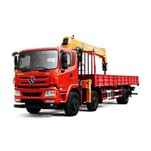
As a future truck, transportation capacity and lifecycle cost are still the primary considerations, which are the foundation of production tools. Secondly, hardware and software upgrades should be taken into consideration, and all of these behaviors should serve lifecycle cost, safety, and humanization.
If we were to predict the future of trucks, we could judge them from three dimensions: leading design and manufacturing, intelligence, and humanization.
1. Leading design and manufacturing to reduce costs and meet differentiation
For the new generation of trucks, products will definitely be based on the needs of end customers, and customized products will become more and more professional.
Due to technological development, operating conditions, and cost considerations, there are bound to be multiple power chain matches, and for different types of goods, vehicle models will also be more finely differentiated. Manufacturers cannot independently develop vehicle models for these situations, which requires trucks to consider platformization and modularization at the beginning of development.
In terms of power, it is necessary to meet as many different types of power as possible. As trucks, there are different configuration requirements for short, medium, long-distance, light, medium, and heavy loads. In the future, without significant breakthroughs in battery technology, it is normal to use different power combinations for different working conditions. However, long-distance vehicles will still be mainly composed of internal combustion engines or hybrid power, and long-distance vehicles may use hydrogen fuel, pure electricity, and Hybrid, etc., tend to favor new energy power in the short to medium distance.
This means that the new generation of vehicle platform needs to meet a variety of different power matching, at least both internal combustion engine and electric motor driven platforms need to be equipped at the same time. Based on internal combustion engine platforms, different types of transmissions and rear axles need to be adapted, and for electric drive platforms, it may be simpler. In the future, electric drive axles will become the mainstream, with different vehicle models and transportation conditions, Using electric drive bridges with different output powers is sufficient.
Finally, there is the digitization of production and manufacturing. Future trucks should have digital design and manufacturing processes, and achieve digital management and optimization of the entire process of design, manufacturing, logistics, etc. through digital technology and internet technology.