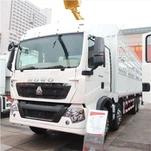
Tight supply and demand of car transport vessels
Charter rates for specialized vessels that carry cars and construction equipment jumped to record highs. A day in October costs 2.6 times what it was in early 2022. This is due to a surge in exports of electric vehicles (EVs) from China and a global shortage of delivery vessels. That adds to the headwind of a shortage of transport ships for automakers plagued by parts shortages.
Rental rates for one-year contracts for 6,500 car loads hit a high of $100,000 a day in October, according to British research firm Clarksons Research. A substantial increase from $38,500 in January 2022. That's 10 times the $10,000 level in mid-2020, when demand was depressed due to the spread of the global pandemic.
When exporting finished vehicles, automakers use special vessels contracted with shipping companies for transportation. Shipping companies not only use their own ships, but also rent ships from ship owners when necessary. The charter fee is the fee paid by the shipping company to the shipowner when renting a ship. When there is a shortage of special vessels, the charter fee is likely to rise.
The main reason for the surge in charter fees is the rapid increase in China's car exports. According to the China Association of Automobile Manufacturers, China's auto exports in 2021 will reach 2.01 million units, doubling from the previous year and surpassing 2 million units for the first time. The export from January to September 2022 will reach 2.11 million vehicles, which is already higher than the whole year of 2021, with a year-on-year increase of 56%.
The driving force is the strong performance of China's pure electric vehicle exports. China exported 310,000 pure electric vehicles in 2021, accounting for 15% of the total exports. Most of them are exported to Europe, which values environmental protection. "Railways are also used to transport cars between China and Europe, but batteries for pure electric vehicles are designated as dangerous goods and can only be transported by ships (with less turbulence)," said an industry source, adding that the special ships Demand is growing.
Production in the global auto industry has been slowing for the past two years due to bottlenecks caused by semiconductor shortages. In this case, Chinese automakers can launch an export offensive. Masashi Chengzuka, senior manager of Japan Research Institute, pointed out: "It seems that Chinese manufacturers use non-automotive semiconductors for automobiles, or pay higher prices (to semiconductor manufacturers) for to ensure".
Stephen Gordon, managing director of Clarksons Research, speculates: "Global vehicle traffic in 2022 is expected to be lower than pre-pandemic levels. However, demand for transport, including travel distances, is likely to recover due to increased long-distance export shipments from China. to pre-pandemic levels."
The recovery in shipping demand has led to an immediate shortage of specialized vessels. Many ocean carriers have reduced the size of their fleets following a drop in car production caused by the pandemic. According to data from relevant sources, the number of car transport vessels with a load capacity of more than 1,000 vehicles in the world will be 750 in 2020, a decrease of 3% from the end of 2019.
A shortage of container ships that transport used cars is also having an impact. Unlike new cars, which are shipped on dedicated ships, used cars are often shipped in containers. Freight rates for container ships have been rising since the fall of 2020 due to increased cargo due to port congestion and stay-at-home demand. "In 2020, the proportion of used cars transported from Japan using dedicated ships will be slightly higher than 50%, but it will rise to about 75% in 2021," said a relevant source.
According to industry insiders, due to the tight supply and demand of ships, shipowners are in a better position and are looking for medium and long-term contracts of three years or more. Shipping companies, on the other hand, prefer short-term contracts and ship only when needed. More and more ship owners require shipping companies to accept higher charter prices in exchange for accepting short-term contracts.
Fears of recession in the U.S. and Europe could dampen demand for autos. Even so, there are still many views that "China's auto exports seem to be expanding from traditional destinations such as the Netherlands and Belgium to other major countries such as Germany and France" (Masashi Chengzuka of Japan Research Institute). The shortage of car haulage vessels is thought to last until around 2024, when new vessels on order due to rising charter rates are expected to enter service.
A shortage of specialized vessels and rising leasing costs are also not working against the Japanese auto industry. Japan's new car sales are improving from their worst period, recording year-on-year growth for two consecutive months, although the impact of semiconductor shortages remains. The shortage of delivery vessels is a serious problem for automakers looking to ramp up production to compensate for planned delays.
Mazda failed to secure ships to transport finished cars from Hiroshima, where the factory is located, to the United States and Europe as planned, and shipments from July to September fell short of the planned 300,000 vehicles. "There is a problem securing ships for transport," said a Mazda official.
On the other hand, the performance of Japan's major shipping companies was very strong. "The balance between supply and demand for car carriers has been very tight due to the increase in China's long-haul exports," Kawasaki Kisen said. The performance of Japan's three major shipping companies from April to September 2022 also shows the strength of the automobile transportation business. Kawasaki Kisen shipped 665,000 vehicles from Japan and the Far East between April and September, up 26 percent from a year earlier.