
Truck drivers have always been a high-risk occupation. Truckers drive on the road every day, and some minor accidents will inevitably occur. At this time, it is particularly necessary to master the necessary knowledge of health and first aid.

Recently, Truck Home has summarized the first aid knowledge frequently encountered by several types of drivers on the road, and shared it with everyone to improve their self-rescue and other-rescue capabilities in case of emergency.
Carry a small medicine box with you
When out of the car, the truck driver should prepare a small medicine box with the car. The common medicine list is as follows:
Gastrointestinal medicines, antidiarrheal medicines, anti-inflammatory medicines, cold medicines, bruises and bruises medicines, athlete's foot medicines, bandages, gauze, disinfectants, thermometers, cotton swabs, medicine spoons, tweezers, etc.
Tips for Preliminary Rescue of Traffic Accidents

Timely rescue
1. When you cannot handle it yourself, you must ask others for help. Immediately contact ambulance. In addition, no matter how big the accident, you need to call the police. Keep the injured safe.
2. In principle, try not to move the injured person. But if the accident site is too dangerous, get help and carefully move the injured person to a safe place.
3, to prevent other car accidents. Use the triangle warning sign to alert the oncoming vehicle.
Preliminary judgment of injury

1. No response to calls, no response to hand pinching at Renzhong and Hegu points, and bilateral mydriasis. It can be concluded that the patient has lost consciousness.
2. Tap the injured person's shoulder (or face), and call out loudly in his ear: "Hey! What's the matter with you?" to test his reaction.
3. In addition to checking consciousness, breathing, and pulse, it is more important to check whether there is heavy bleeding.
Correct emergency calls

1. Patient name, gender, age.
2. The most critical condition of the patient at present. Such as collapsing on the ground, severe pain in the precordial area, dyspnea, heavy bleeding, etc., the onset time, process, medication, past medical history and factors related to this onset.
3. The detailed address and telephone number of the patient's accident scene and the exact address of the waiting ambulance. It is best to choose a place with obvious conspicuous signs.
Commonly used professional first aid knowledge
Open the airway
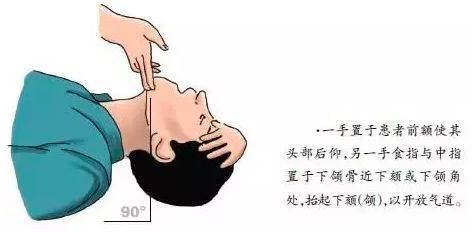
Place the casualty in the supine position. If there is a foreign body in the mouth, it should be removed immediately. Comatose people often have their tongue falling back to block the airway. At this time, the rescuer should be on the side of the injured person, put one hand on his forehead and press down, while the other hand lifts his chin so that the line connecting the mandible and the earlobe is on the ground. Basically at 90°, so that the airway is opened.
first aid for arterial hemorrhage
1. Bleeding from small arteries, the wound is not big, you can apply sterile cotton on the wound, and press the bandage to stop the bleeding.
2. When the bleeding does not stop, the injured limb can be raised to slow down the blood flow and help stop the bleeding
3. When the bleeding of the limbs is serious, the tourniquet can be tied on the upper end of the wound. Before tying, a towel or cloth should be put on it, and then it must be relaxed once every half an hour. The binding time should not exceed two hours in total to avoid ischemic necrosis of the limbs. . After preliminary treatment, it should be sent to the hospital for treatment immediately.
Handling method
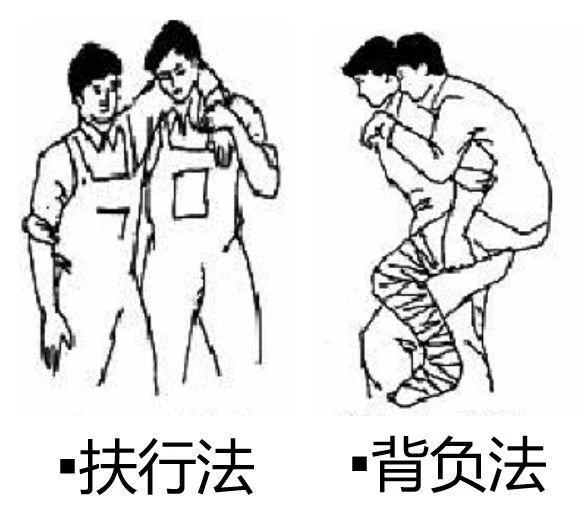
The correct handling method can reduce the pain of the patient and prevent the aggravation of the injury; the wrong handling method will not only aggravate the pain of the injured patient, but also aggravate the injury. Therefore, correct handling is particularly important in on-site ambulance.
Operation points
The following points should be mastered when moving:
After on-site rescue, measures should be taken according to the severity and characteristics of the injured patient, such as support, back transportation, and double transportation. The patient cannot adopt the method of back transportation; the injured patient with serious injury, coma, visceral injury, spine, pelvic fracture, and fracture of both lower extremities should adopt the method of transporting the equipment on a stretcher; if there is no stretcher on site, make a simple stretcher, and pay attention to the contraindications. .
artificial respiration

Pinch the nostrils with the thumb and forefinger on the forehead, wrap the mouth around the patient's mouth, take a deep breath first, and then blow twice. Don't blow too hard. After blowing, the patient's chest rises and falls, indicating that artificial respiration is effective. If the carotid pulse disappears, it can be considered that the heart has stopped (the carotid artery is located 2-3 cm next to the Adam's apple).


